When patients walk into the sanctuary clutching an ache in the knees or thumbs, they often begin with the same sentence: “Doc, akala ko naman dahil malamig lang ang arthritis.” Most of them have read articles meant for Chicago, London, or Seoul — places where the standard advice is to bundle up and wait out the winter. Manila has no winter. What it has is a long, warm, humid year with a very wet back half, and the rhythm of arthritis here is simply different.
In over two decades of practice — first in a public rheumatology clinic, now part-time at Lunas Hilom — I have learned that the tropical body does not read the same textbooks. The joints of a tita who has been walking the wet markets of Quezon City for forty years do not behave the way the literature predicts. Understanding why is the first step to relief that actually lasts.
Why the tropics rewrite arthritis
The common belief that arthritis only flares in the cold is a half-truth. What joints respond to is not temperature alone but barometric pressure changes, humidity, and the stiffness that comes from long periods of stillness. Tropical Manila gives us all three, just in a different arrangement than temperate cities.
According to DOH community health estimates, roughly one in five Filipinos over the age of fifty reports some form of chronic joint pain — osteoarthritis leads, followed by gout and rheumatoid arthritis. That figure climbs steeply in barangays where daily life still involves squatting to cook, climbing jeepney steps, and carrying grandchildren on the hip. These are the real arthritis habits of the Philippines, and they don’t map cleanly onto European lifestyle studies.
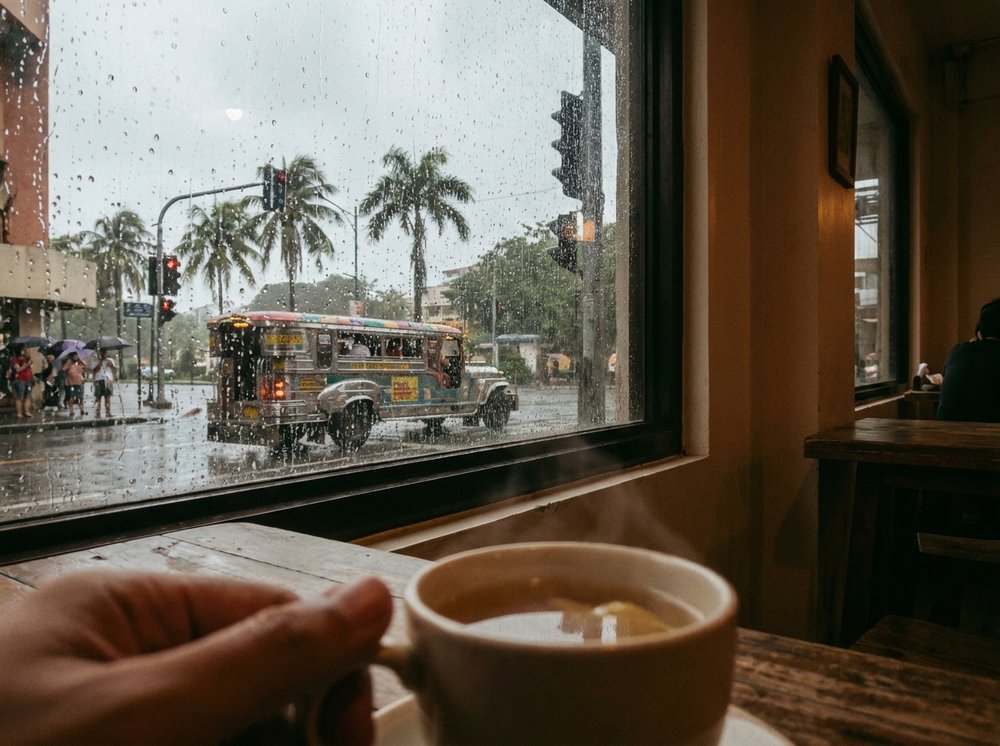
Humidity, in particular, matters more than many doctors admit. When the air holds 85–95% moisture — as it routinely does from June through November — soft tissue around the joint swells subtly, tendons glide less smoothly, and the small capsule of fluid inside the joint shifts in pressure. Many patients feel this as a deep, dull ache that begins the evening before a storm. I have written a separate, longer note on that specific phenomenon in when rainy-season humidity worsens joint pain, which is worth reading if you live anywhere from Marikina to Antipolo.
Morning versus afternoon flares
In cold countries, arthritis pain tends to peak in the evening, after a day of cold exposure. In the Philippines, the pattern is almost reversed for many of my patients.
- Morning stiffness (5:30–8:00 AM) is the most common complaint — knees, fingers, and lower back that refuse to bend for the first fifteen to thirty minutes after waking. This is mostly from overnight stillness, not cold.
- Afternoon heaviness (2:00–5:00 PM) appears on the hottest days, when dehydration and prolonged sitting (in a jeepney, behind a sari-sari store counter, in front of a fan) tighten the hip flexors and calves, pulling on the knees.
- Pre-storm deep ache is felt in the joints that have been injured before — an old volleyball knee, a fall from a tricycle twenty years ago — hours before the rain arrives.
Naming these three patterns for yourself is already useful. Most arthritis care in the Philippines defaults to a one-size painkiller prescription, but if you know your flare shape, you can meet it with the right tool at the right hour.
What actually helps in Manila heat
Here is where tropical wisdom diverges from imported advice. Heating pads and hot baths — the standard recommendation in temperate countries — are less useful when you are already sweating at 9 AM. What works in Manila tends to be gentler, rhythmic, and paced to the day.
1. Move early, before the heat settles
The coolest, most forgiving window is between 5:30 and 7:00 AM. A short walk around the barangay, ten minutes of gentle stretching on a banig, or the simple act of slowly straightening and bending each knee twenty times while still in bed — all of these unlock the joint before stiffness has a chance to set. Our physiotherapist has a practical morning routine written up in daily mobility rituals for stiff knees.
2. Eat for the inflammation, not against it
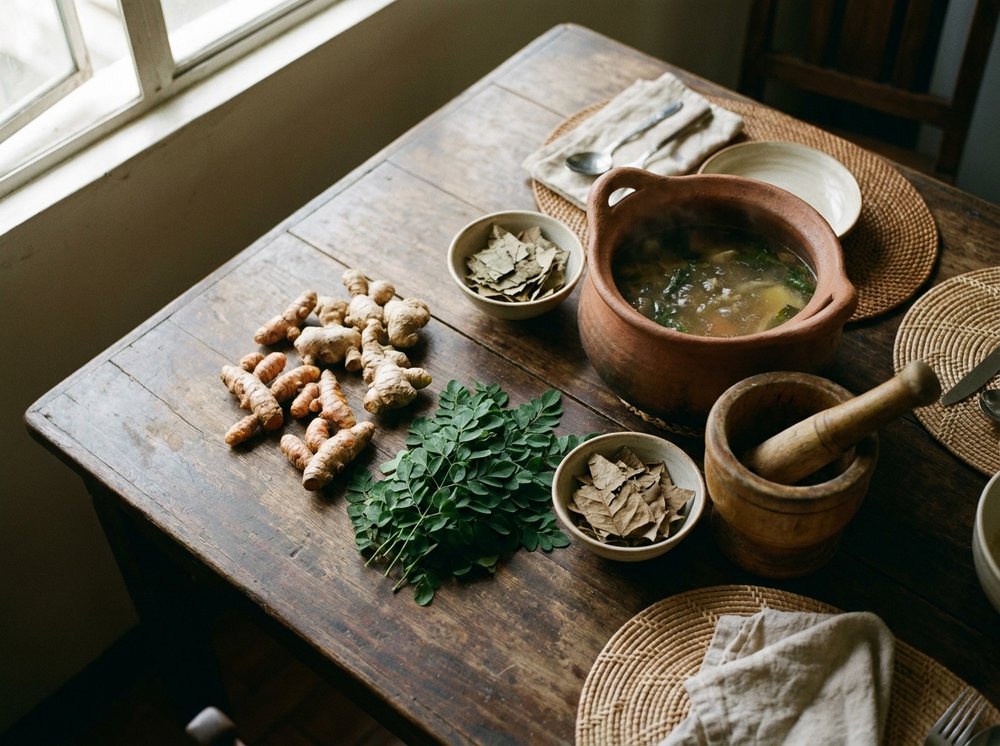
Filipino cuisine has more anti-inflammatory tools than most patients realize. Luyang dilaw (turmeric), luya (ginger), malunggay, and oily fish like bangus and tamban do quiet, cumulative work. We wrote a whole piece on Filipino foods that calm inflamed joints — it is the article I print out for patients who ask what they can do from the kitchen.
3. Use warm, not hot, compress on damp days
A cloth wrung from water that is merely warm — about the temperature of fresh tsokolate — applied for ten minutes to a sore knee on a rainy evening, is often more soothing than any balm. The goal is to relax the tissue, not to cook it.
4. Ventosa for the deep, stubborn aches
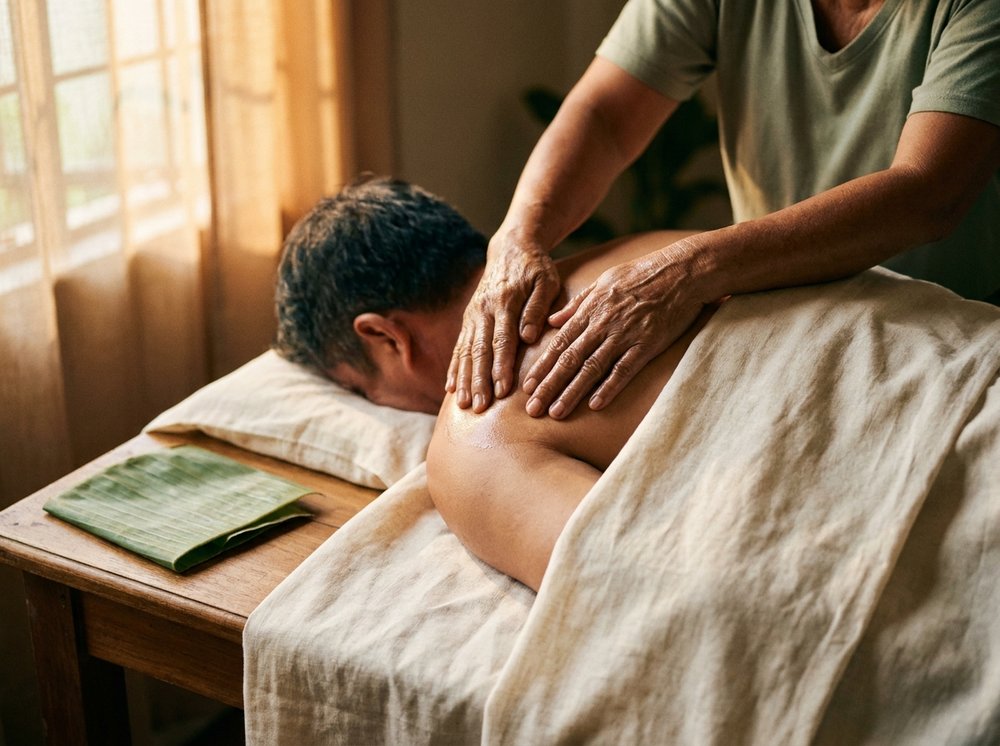
For the kind of arthritic pain that sits behind the shoulder blade or in the lower back and will not budge with stretching, traditional ventosa cupping has a long Filipino lineage for a reason. The gentle suction draws stagnant circulation back into the tissue and, in my clinical experience, buys many patients two or three good days where nothing else did.
The Filipino body has always known how to age in the tropics — we just need to remember what our lolas already did, and combine it with what modern medicine can now measure.
When to see a doctor, not just a healer
Traditional care and medical care are not opponents. I send patients to classic hilot and ventosa all the time, and our manghihilots send patients to me when they feel something is beyond their reach. That exchange, handled honestly, is how people get better. But there are a few signs that mean you should call a physician first, before anything else:
- Joint that becomes hot, red, and swollen within hours — possible gout attack or septic joint.
- Morning stiffness lasting longer than one hour, especially with small-joint involvement in the hands — possible rheumatoid arthritis.
- Sudden inability to bear weight on a knee or hip.
- Fever with joint pain.
- Unexplained weight loss with chronic joint pain.
For everything else — the chronic ache that worsens before a typhoon, the knee that complains on stairs, the thumbs that protest when you open a jar of bagoong — there is a gentler, longer path. That is the path this sanctuary was built around. For a wider view of how Filipino traditions think about the joints and the body as a whole, our notes on the Visayan roots of joint-focused hilot are a quiet companion piece to this one.
Arthritis in the tropics is not a life sentence. It is a conversation — between your joints, the weather, your kitchen, and the hands of whoever helps you. Learn its rhythm, and you can almost always soften it.