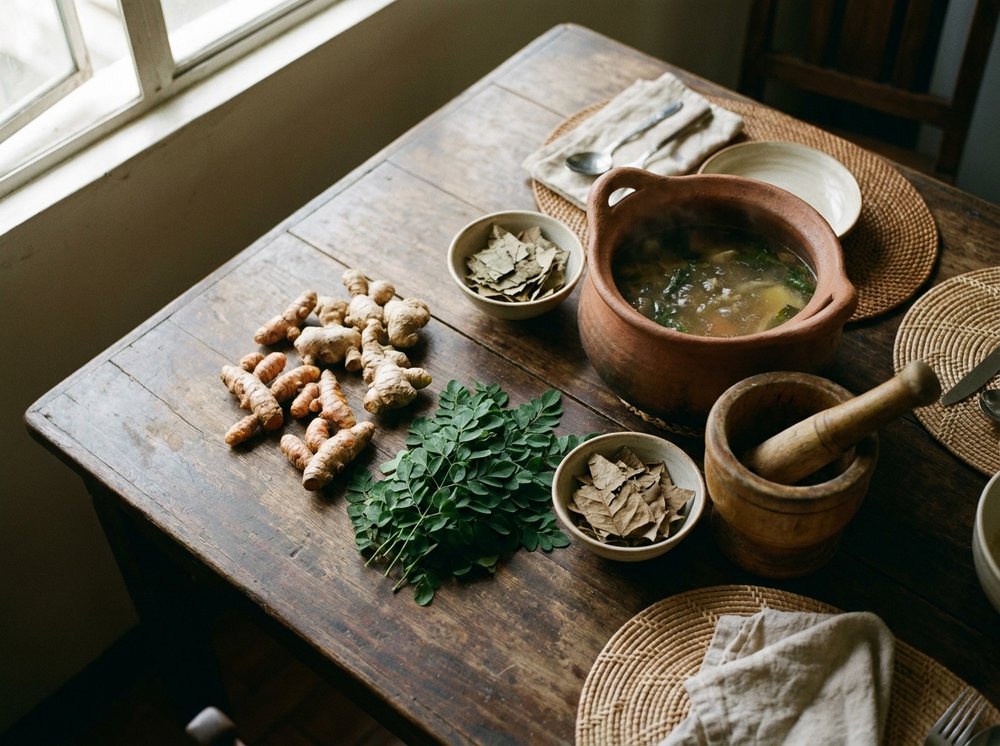
When my grandmother in Loboc, Bohol, made tinola for a neighbor with rayuma, she did not think of it as medicine. She thought of it as food. The luya floated in the broth because it warmed the chest, the malunggay was thrown in because it was free and green on every fence, and the chicken was there because there was chicken. Forty years later, when I read the journals that my colleagues in medicine send me, I see the same soup written in the language of laboratory studies — gingerol, moringa isothiocyanates, omega-3, flavonoids.
The pantry we already have in this country does quiet anti-inflammatory work if we let it. I am not a doctor — I am a manghihilot, and I trained under my grandmother who never owned a cookbook. But I have watched enough bodies soften under my hands over thirty years to know when a diet is helping a joint and when it is not. If you have been reading our note on arthritis in a tropical climate, this piece is the kitchen half of that conversation.
The Filipino anti-inflammatory pantry
Here is the short list — not exhaustive, but the things I would put on a barangay shopping list for a tita with aching knees.
Luyang dilaw (turmeric)
The orange root, not the powder. Curcumin is the molecule researchers chase, but in a real Filipino kitchen you do not need to isolate it. A two-centimeter piece, crushed with a knife and simmered in soup or coconut milk, does what it does. Pair it with black pepper — the piperine increases absorption — and a little fat. Never eat it dry.
Luya (ginger)
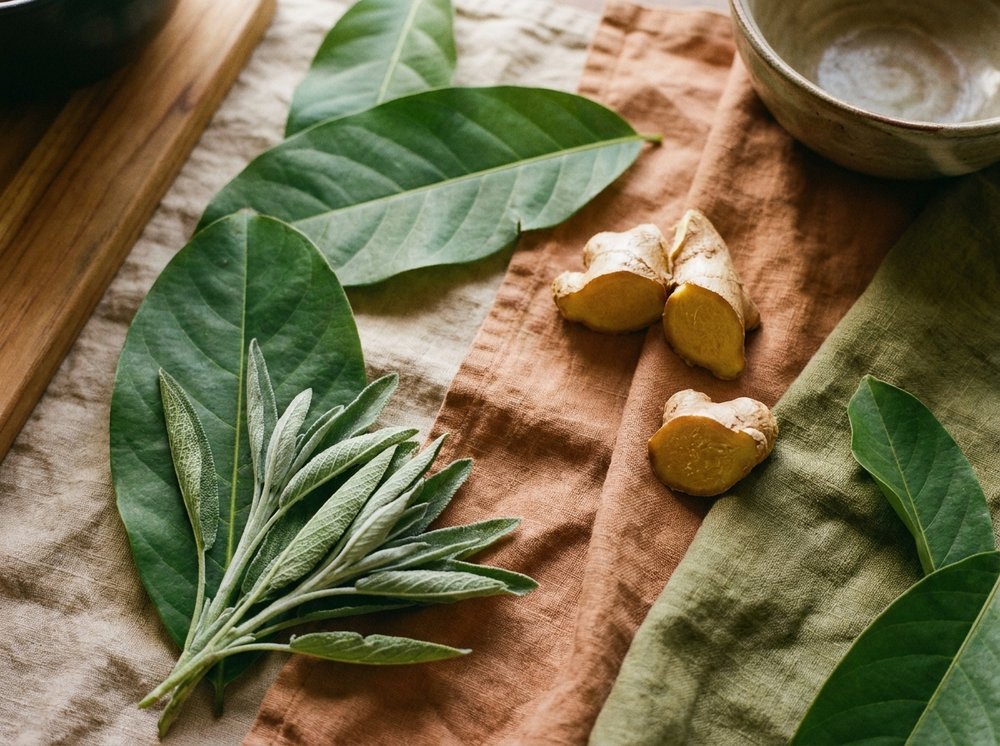
Ginger is the more gentle sister. It soothes the stomach (which matters, because many arthritis patients take NSAIDs that irritate the gut), warms the circulation, and eases morning stiffness for many of my clients. Salabat — plain ginger tea, lightly sweetened with muscovado — is the simplest daily anti-inflammatory in Filipino life.
Malunggay (moringa)
Free, everywhere, and quietly one of the most nutrient-dense leaves on the planet. Rich in polyphenols and vitamin C. A cup of malunggay tops in tinola or a handful wilted into fried rice three mornings a week is enough. Do not overcook — bitter leaves mean you have killed half the benefit.
Oily small fish — bangus, tamban, galunggong
The cold-water salmon that Western articles keep recommending is expensive and not native to our waters. We have our own omega-3 sources: milkfish (bangus), sardines (tamban), scad (galunggong). Two to three servings a week of any of these, grilled or stewed rather than deep-fried, feeds the fatty tissue around your joints the right kind of fat.
Banaba and sambong leaves
These two deserve their own note — and we have written it, in our piece on banaba, sambong, and the old Filipino herbal cabinet. Banaba tea, drunk once a day, gently supports blood sugar, which in turn reduces systemic inflammation. Sambong, long used for swelling and fluid retention, earns its place in the rainy-season routine.
Saluyot and ampalaya leaves
Mucilaginous, mineral-rich, deeply old. Boiled as a vegetable or stirred into monggo, they are the humble kind of medicine that never needs a label. My lola called ampalaya leaves “pampatibay ng dugo.”
Coconut in its many forms
Virgin coconut oil, warm coconut milk, even young buko water — Filipino bodies have lived on coconut for centuries. A tablespoon of coconut oil used in cooking is fine; a glass of buko water on a hot afternoon helps with hydration, which joints quietly need.
Three simple ways to put this on your table
You do not need to overhaul your diet. You need three or four habits that repeat.
1. Lola’s healing tinola — for Sunday
Sauté garlic and sliced luya in a small pot. Add chicken pieces, brown briefly. Pour water, add two smashed lemongrass stalks and a thumb of crushed luyang dilaw. Simmer 30 minutes. Ten minutes before serving, add green papaya or sayote. Turn off heat, stir in two generous handfuls of malunggay leaves. Salt to taste. Eat hot.
This is not a recipe — it is a reminder. Every Filipino kitchen already knows this. What changes is the intention behind the luyang dilaw and the malunggay: they are the medicine, the chicken is the vehicle.
2. Morning salabat — for every day of the rainy months
Crush a two-centimeter piece of ginger with the flat of a knife. Steep in a cup of just-boiled water for 8 minutes. Add a teaspoon of calamansi juice and half a teaspoon of muscovado or honey. Drink warm, slowly, before coffee.
In the wet months, when the joints speak up before the rain, this single cup is enough to shift an entire morning. We have written separately about why that shift matters during rainy-season humidity flares.
3. Turmeric-coconut milk fish — for a weeknight
Rub a bangus fillet with salt and black pepper. In a pan, simmer a cup of coconut milk with crushed luyang dilaw, two cloves of garlic, a small red chili if you like heat, and a pinch of salt. Slide the fish in, cover, cook 8 minutes over gentle heat. Serve with rice and wilted malunggay.
Three active anti-inflammatory ingredients — omega-3, curcumin, moringa — in one quiet plate.
We do not need to import anti-inflammatory diets. We need to cook the ones our grandmothers already kept alive on Sunday afternoons.
What to keep at arm’s length
The other half of an anti-inflammatory kitchen is what you reduce, without becoming unhappy. My honest list, drawn from what I see in my own clients:
- Deep-fried fast food more than twice a week — the repeated seed-oil heating produces compounds joints do not love.
- Sweet milk tea and bottled juice daily — the sugar spike quietly feeds systemic inflammation.
- Processed meats as a main protein — occasional tocino is fine; daily is not.
- Alcohol more than twice a week, especially if you have gout in the family.
Notice none of these are forbidden. Filipino food culture is built on pagsasalu-salo — we eat together, often, and that is part of staying well too. The aim is a gentle shift in the weekly average, not a purist diet.
When food is not enough
Food works slowly. If your joints are already in an acute flare — red, hot, swollen — diet will not be fast enough. That is when hands-on care matters. Many of our guests pair a weekly hilot session with the kitchen habits above and find that the two rhythms reinforce each other: the manghihilot softens the tissue from outside, the food softens the inflammation from inside.
Start small. One cup of salabat tomorrow morning. One extra handful of malunggay in whatever soup is on the stove tonight. The pantry is already there — we are only remembering it.