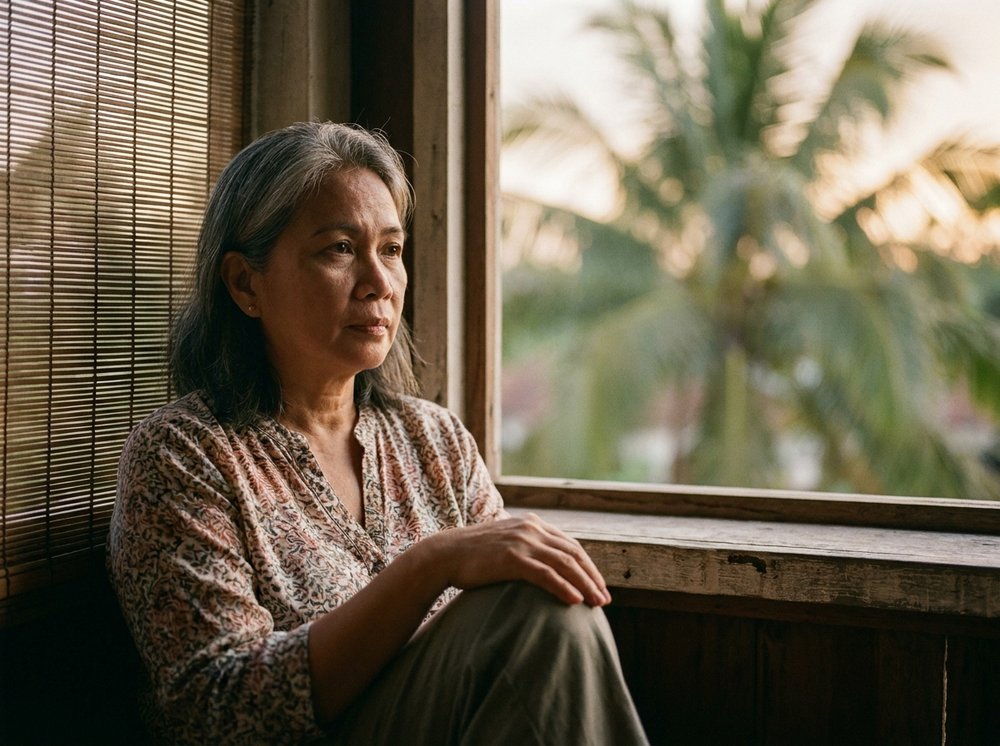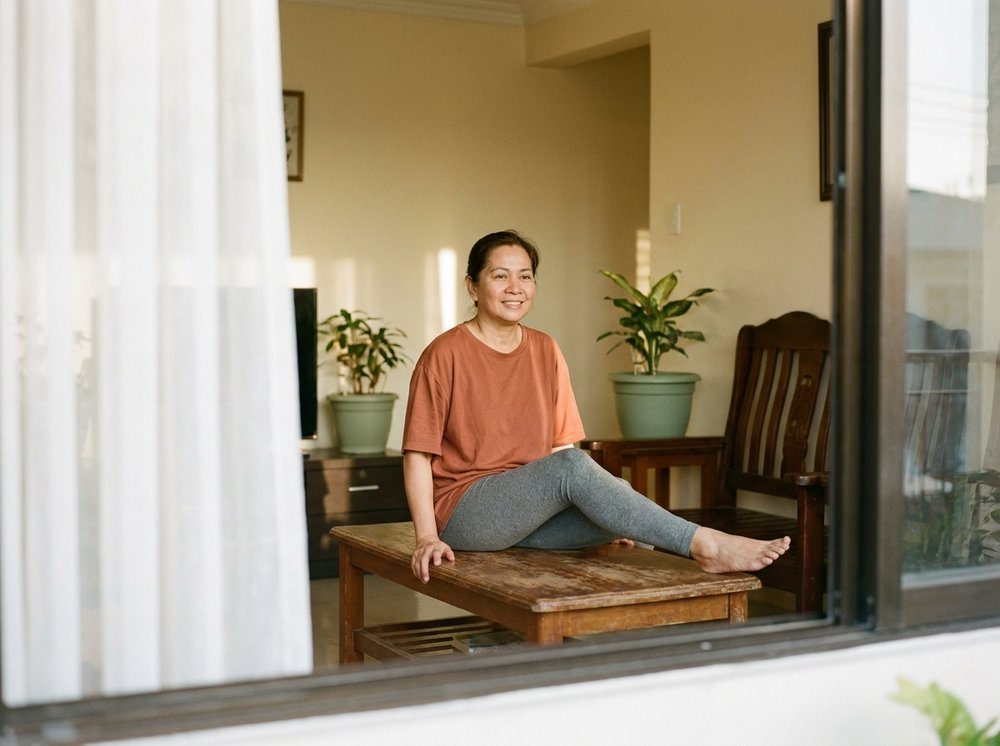
My lola could predict Ondoy the night before, and she did it with her left hip. She would sit on the bamboo bench outside the Loboc house and announce, “Uulan ng malakas bukas.” The next day the sky would collapse. For years I thought this was folklore. Then I studied physiotherapy and realized that my grandmother was reading a barometer made of cartilage.
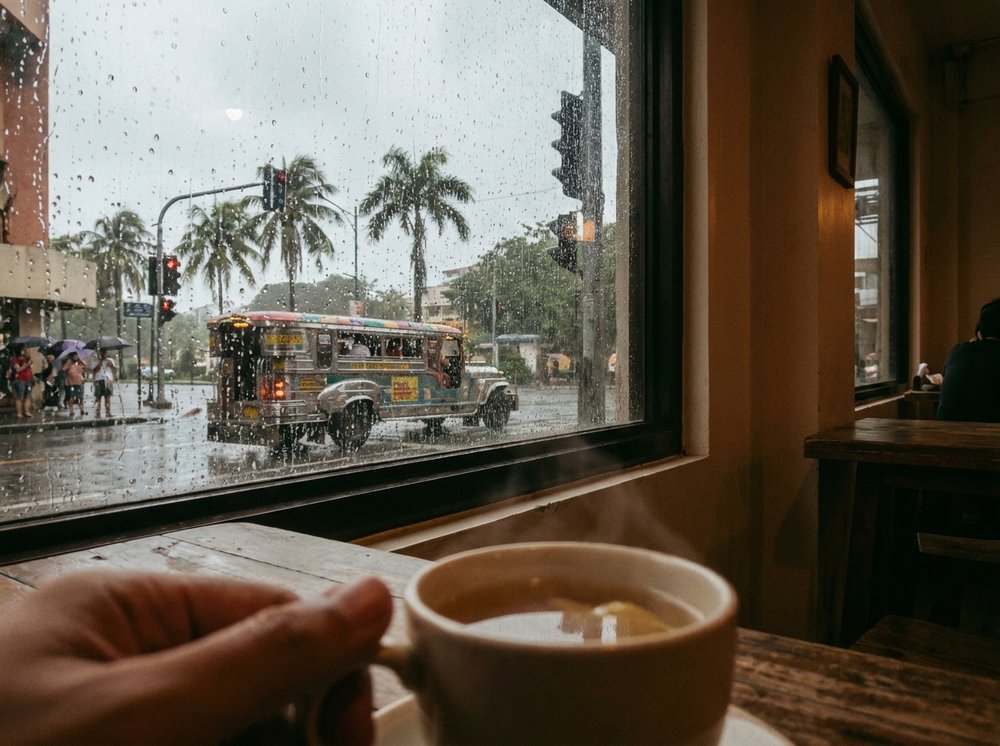
From June to November every year, Manila enters its long wet conversation with the sky. For anyone with arthritis, an old fracture, a rebuilt knee, or simply sixty-five years of honest walking — this is the hardest season. If you have already read our note on arthritis in a tropical climate, this piece goes deeper into the specific mechanics of the rainy months.
Why a low-pressure day hurts
A storm is, in physical terms, a column of low air pressure. As it approaches, the atmospheric weight pressing down on your skin decreases. Inside a healthy, well-lubricated joint, this is invisible. Inside a joint with wear, scarring, or inflammation, it is not.
Three things happen at once:
- Soft tissue expands slightly. The capsule around the joint, tendons, and surrounding fascia all swell a fraction of a millimeter. In a joint that already has little room to spare, that is enough to press on pain-sensitive nerves.
- Humidity climbs past 85%. Sweat evaporates less efficiently, so the body’s natural cooling slows, circulation redirects, and the deep tissues become subtly more congested.
- Activity drops. Rain keeps people indoors; stillness is the fastest way to stiffen a sensitive joint.
The combination is what you feel as the deep pre-storm ache. It is not imagination, and it is not weakness. It is physics meeting biology.
What the Manila wet season actually does
Our rainy season is not a single event. It has phases, and each one asks a different thing of your joints.
June — the arrival
The first real typhoons brush Luzon. Many patients report their first flare of the year in the last week of June, almost like clockwork. This is the month to refresh your morning routine — the one we describe in daily mobility rituals for stiff knees — before you actually need it.
July to September — the deep wet
Humidity sits at 88–94% for weeks. Old injuries ache most during these months. The afternoon thunderstorms are predictable enough that you can plan your day around them: move in the morning, rest in the afternoon heat, move again briefly in the cool evening.
October to November — the long tail
Storms become less frequent but more severe. This is Ondoy season in living memory for many Quezon City households. Pressure swings are larger, so flares can be more dramatic even when the weather itself is calmer.
What to wear
This sounds small, but my clients who follow it have measurably fewer flares.
- Long, loose cotton trousers indoors when the aircon is running. Many Manila homes and offices blast the aircon during the wet months to fight humidity, and joints do not love the direct cold draft on a damp day.
- A light cotton shawl or jacket in air-conditioned jeepneys, MRTs, and malls. Especially over the shoulders and lower back.
- Supportive, closed shoes — not slippers — on rainy days. Wet tile is a common cause of sudden knee re-injury in patients over 55.
- Thin knee or elbow sleeves (cotton, not compression-strength) for anyone with a history of injury there. They are less about support than about keeping the joint a consistent temperature.
When to move, when to rest
The instinct on a rainy day is to stay on the couch. Most of the time, this is wrong. Joints need gentle movement on wet days almost more than on dry ones.
My general rule for clients:
- Morning, before 9 AM: move, always. Five minutes of the mobility routine, ten minutes of walking around the living room if it is pouring outside.
- Afternoon, 1 PM–4 PM: rest lightly. A short nap is fine. Avoid long stretches of sitting in the same position — every 45 minutes, stand up, walk to the kitchen, return.
- Evening, 6 PM–8 PM: move again, briefly. Gentle stretches, a slow walk if the rain has paused.
- Pre-storm ache night: warm compress, 10 minutes, on the specific aching joint. Light dinner. Early sleep.
Warm compresses, the right way
On a rainy Quezon City evening, a warm compress done well is quietly transformative. Done badly, it can irritate the skin and miss the joint entirely.
- Heat water until it is hot to the finger but not scalding — roughly 42–45°C.
- Soak a clean cotton cloth, wring until damp, not dripping.
- Place over the joint. Cover with a dry towel to hold warmth.
- Ten minutes. Not twenty. Remove before the cloth cools fully.
- Follow with two minutes of the gentle mobility exercises you already know.
A dash of luya crushed into the water, or a few drops of lagundi decoction, is optional but traditional. Filipino hands have been doing this for generations.
The rainy season is not an enemy — it is a conversation. When the sky drops its pressure, we drop our pace, not our care.
When to book help
A single rainy week of increased ache is normal. A three-week stretch of pain that is worsening is not. If the flare is not settling, this is where hands-on care shortens the suffering dramatically.
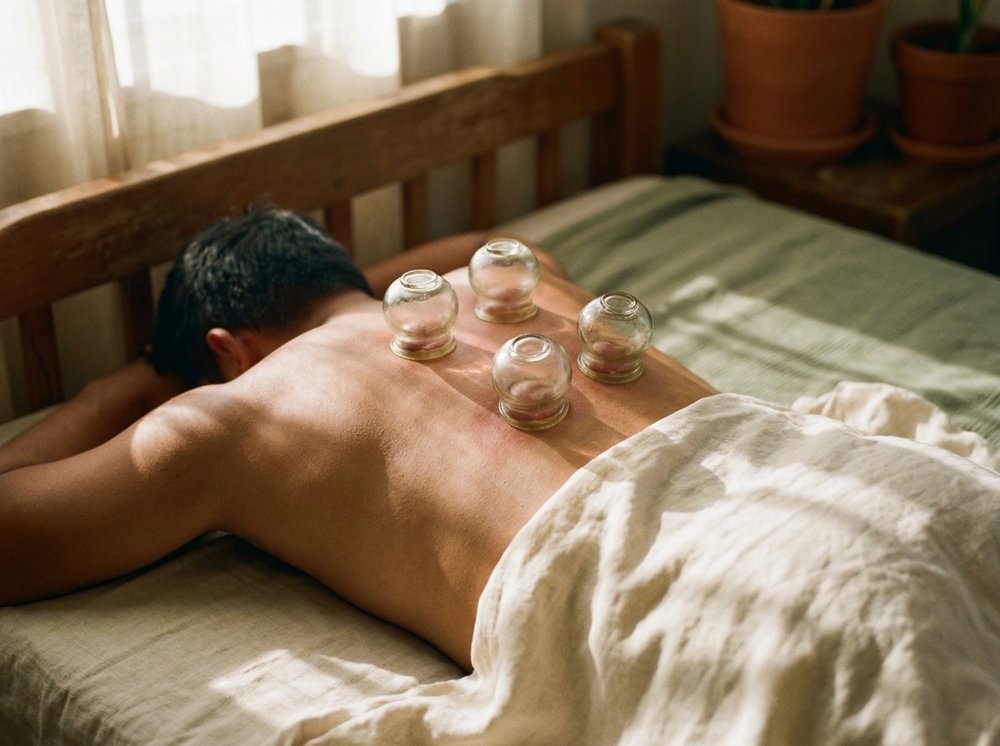
For deep, stubborn aches that sit behind the shoulder blade, along the lower back, or under the gluteus, ventosa cupping therapy is probably the single most effective tool in our sanctuary during the wet months. The suction draws the stagnant circulation that humidity creates back into the tissue, and patients often walk out breathing deeper than when they arrived.
For the wider context of how Filipino traditions have always read the weather on the body, our note on the Visayan roots of joint-focused hilot is a gentle companion. Our grandmothers already knew most of what we are now proving in laboratories — the rainy season asks a different rhythm, and the body rewards whoever is willing to listen.