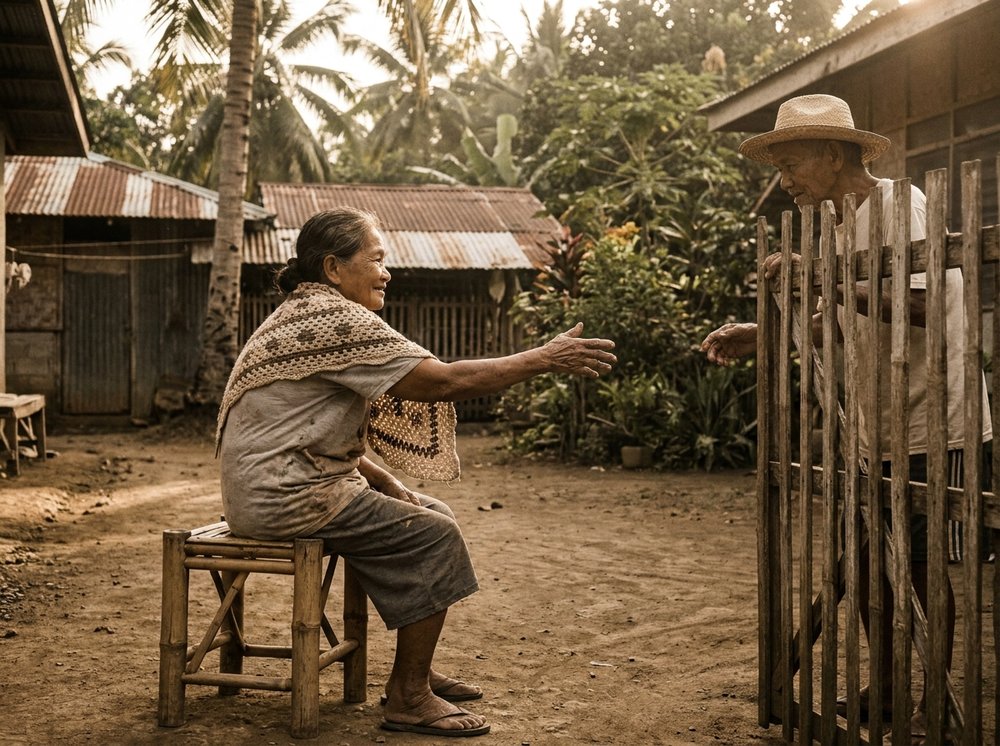
My grandmother kept three plants in her yard in Baclayon, and she kept them for reasons. The banaba tree gave shade and lavender flowers and a tea she brewed for my aunt whose blood sugar ran high. The sambong grew by the fence in a patch that smelled strongly of camphor when you crushed a leaf — it was her remedy for water retention and the occasional kidney stone. The luya (ginger) lived in a pot by the kitchen door, and came out every time somebody had a stomach ache, a cold, or lagnat in the afternoon.
I want to walk through each of these plants carefully. Not because I think they replace medicine — they don't — but because they are part of the same four-hundred-year Filipino healing tradition that shapes the bodywork we do in this sanctuary, and because the lolas who still prepare them deserve to have what they know written down somewhere gently.
Banaba — Lagerstroemia speciosa
Banaba is a medium-sized tree, common across Luzon and the Visayas, with showy purple-pink flowers that bloom in the hot months before the rains. The useful part is the leaf. Lolas pick the older, darker leaves (the younger ones are less potent), dry them, and simmer them in water — usually a small handful in a litre, boiled down by a third, drunk warm.
Ethnobotanically, banaba has been studied for its effect on blood sugar. The active compound, corosolic acid, has been shown in small clinical trials (published in Journal of Ethnopharmacology and elsewhere) to improve post-meal glucose uptake in people with mild type-2 diabetes. The evidence is modest but consistent. It is not a replacement for metformin or insulin, and no responsible lola would say it was. What it can do, gently, is support a diabetic diet.
Safety note: Banaba may lower blood sugar further if combined with diabetic medication, so if you are on medication, drink it under a doctor's supervision. Avoid during pregnancy, as long-term safety data is thin.
Sambong — Blumea balsamifera
Sambong is a tall, hairy shrub with pale green leaves that give off a camphor-like smell when crushed. It grows almost everywhere in the Philippines, from backyards in Manila to hillsides in Mindanao. The Department of Health has in fact registered sambong as a herbal medicine for adjunct treatment of urolithiasis (kidney stones) and mild hypertension — one of the few Philippine medicinal plants to receive such official recognition.
Lolas brew sambong tea from fresh or dried leaves, usually about five to seven leaves in a cup of water, steeped for ten minutes. It is mildly diuretic — that is, it encourages the kidneys to produce more urine — and this property is what makes it useful in helping to pass small kidney stones and in reducing mild fluid retention (the kind that makes ankles puffy in the afternoon). Some users also drink it after eating salty food.
Clinical studies — including trials at the National Kidney and Transplant Institute — have supported its use for small kidney stones. Beyond urinary use, the DOH also acknowledges its role as an adjunct for mild hypertension, though it does not replace antihypertensive medication.
Safety note: Because sambong is diuretic, do not drink it if you are already on diuretic medications without telling your doctor; the combined effect can lower your potassium too much. Stop if you notice dizziness or muscle cramps.
Luya — Zingiber officinale
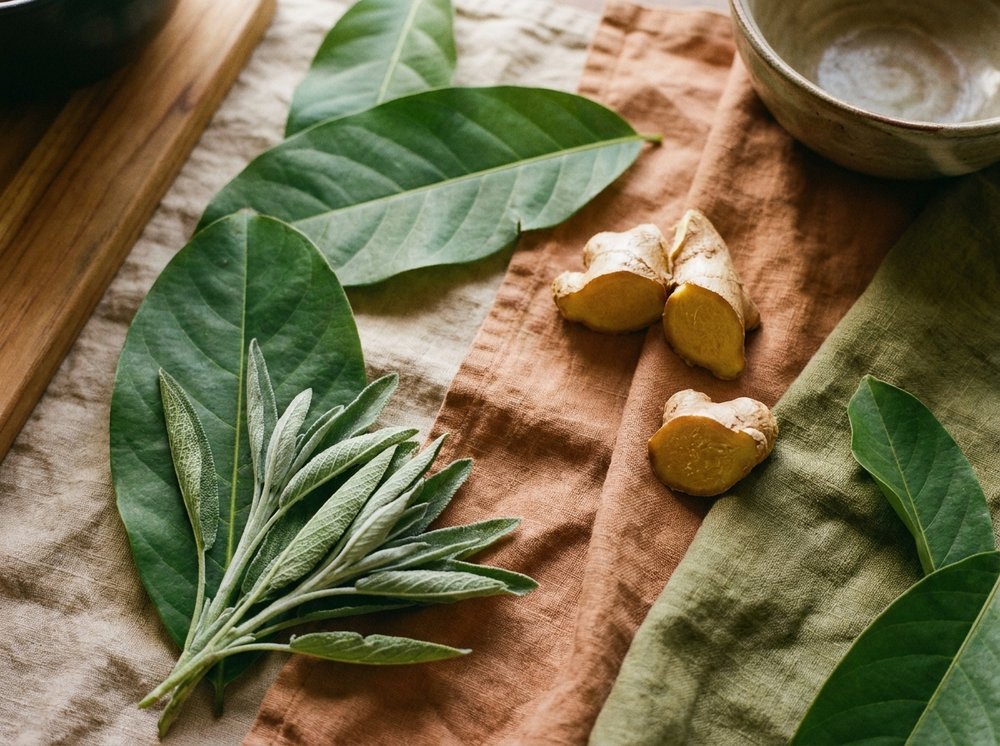
Ginger needs the least introduction. It is in every Filipino kitchen, in arroz caldo, in tinola, in salabat (ginger tea). My grandmother drank salabat almost daily — a thumb-sized piece of fresh ginger crushed, boiled for ten minutes, sweetened with a teaspoon of honey or muscovado.
Of the three plants in this article, ginger has the richest body of clinical research. Systematic reviews have found good evidence for its usefulness in nausea (pregnancy-related nausea, motion sickness, post-operative nausea), moderate evidence for its role in reducing menstrual cramping, and some evidence — more in older guests — for easing the muscular aches associated with osteoarthritis. The anti-inflammatory compounds in ginger, chiefly gingerols and shogaols, have been characterised in detail.
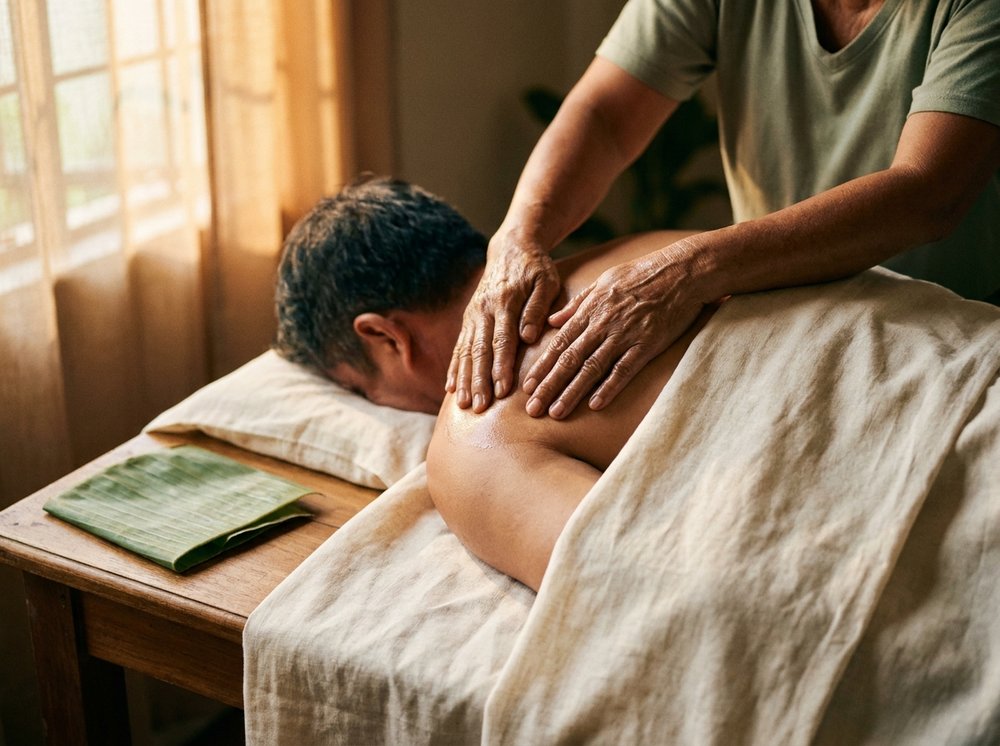
For joint discomfort, particularly in the knees, many of our older guests at Lunas Hilom combine daily salabat with our gentle joint-mobility work and a warm compress. The salabat is not a cure; it is a small, daily, warming contribution to overall comfort. Our lolas would put it more simply: ginger warms the cold in the body.
Safety note: Ginger in food quantities is safe for almost everyone. In medicinal doses (more than 3–4 grams of dried ginger daily), it can thin the blood and should be discussed with your doctor if you are on blood thinners, before surgery, or if you have gallstones.
How the lolas prepare them
There is a style of preparation in Filipino kitchens that the newer teas-in-sachets never quite capture. A good lola uses fresh plants when they are available, cooks them gently rather than boiling them hard, and keeps the water in a glass jar on the counter, drunk throughout the day rather than all at once. She does not measure with a scale. She measures with her palm, because a palm is the size of the person being healed.
"The plant knows who is drinking it. The hands only help the plant remember."
— Nanay Lourdes, Baclayon, Bohol, 1993
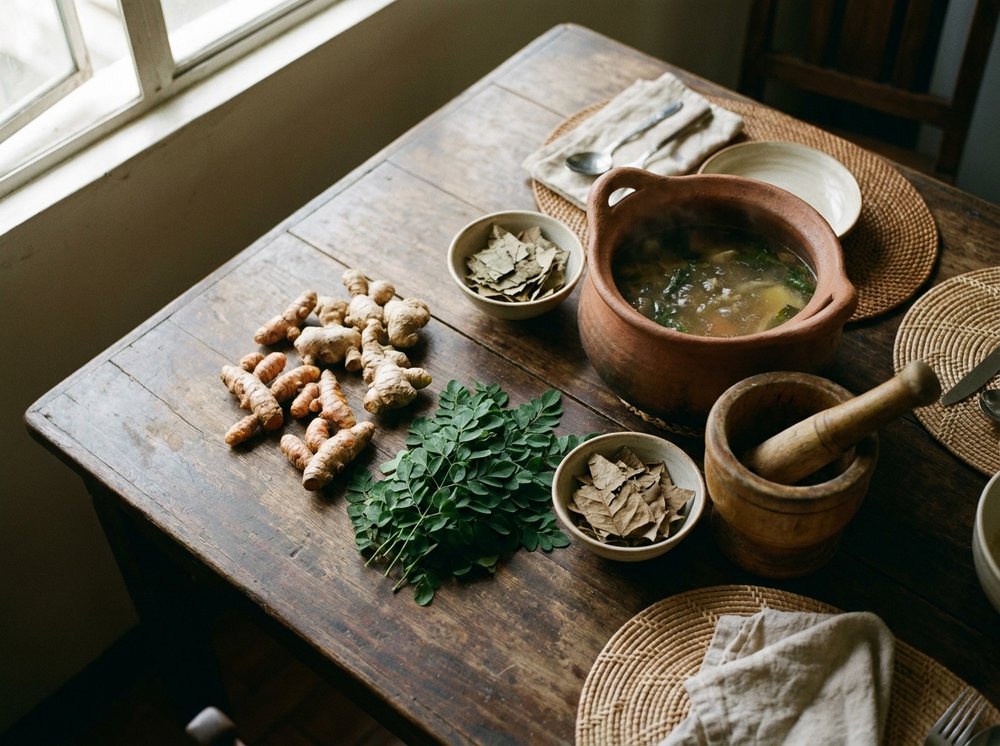
I do not ask my hands to remember what my grandmother's knew, not perfectly. I take notes now. I buy dried banaba leaves from the Sunday market in Cubao and I grow my own sambong in a pot on the sanctuary balcony. The tanglad (lemongrass) and luyang dilaw (turmeric) on the windowsill are for cooking, mostly, but they drift into the tea jar too.
Plants are part of a practice, not a menu
The lolas did not treat plants like supplements. A cup of banaba tea was part of a day that also included walking to the market, a proper noon meal, an afternoon nap, a wash with cool water, a conversation at dusk with the neighbours. The plant was one small thread of a larger fabric — which, in our sanctuary, is still the way we understand them.
When a guest asks us which plant will fix her joints, we usually answer that no plant fixes joints — careful hands plus gentle movement plus a thoughtful diet plus, yes, perhaps some salabat in the afternoon, is closer to the truth. If you are interested in the broader barangay context of Filipino healing — the role of the manghihilot as community figure — we have written on the manghihilot in a barangay, and you might find it a useful companion piece.
Most of all: plants are a quiet practice. They ask for patience. They reward it.