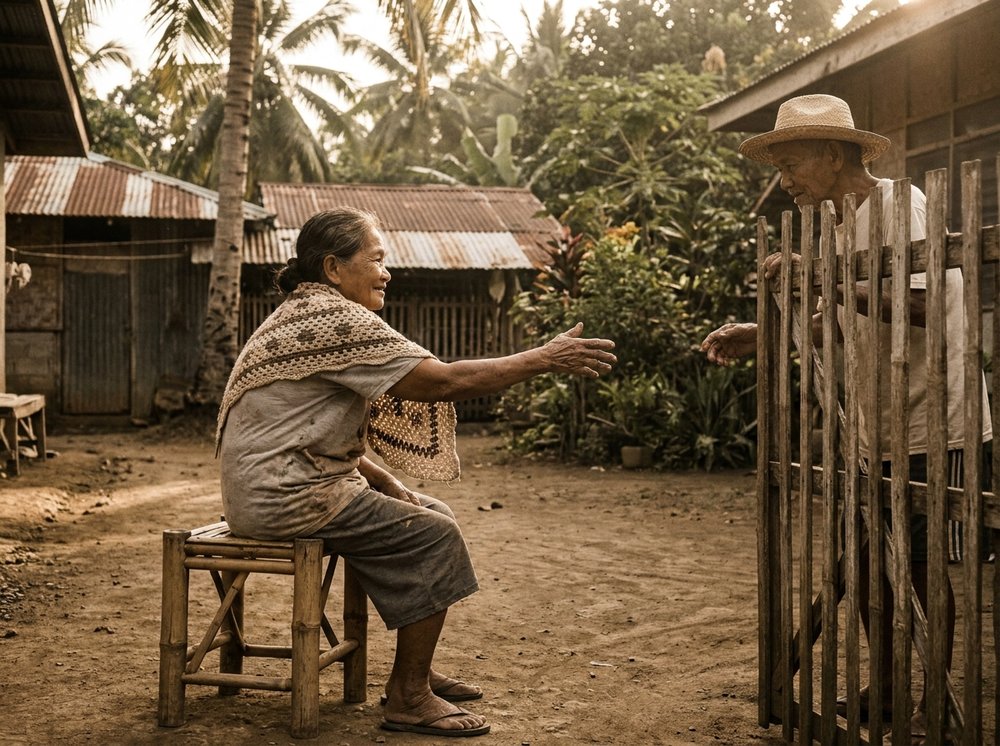
Before the Spanish came, before the word kilo or the word clinic, there were women in the islands who read the body with their thumbs. They were called babaylan in the Visayas, catalonan in the Tagalog region, mumbaki in the Cordillera. They were priestesses, midwives, herbalists, and bonesetters all at once. If a child had lagnat, they were called. If a fisherman's shoulder locked in the monsoon, they were called. If a pregnant woman needed the baby turned, they were called. Hilot was not yet a word on paper. It was a way of keeping the barangay alive.
I was taught by my grandmother in Baclayon, Bohol — a woman who never wrote anything down but who could tell, from ten seconds of pressing a wrist, whether the patient was eating rice too fast or not sleeping because of a quarrel with a daughter-in-law. She called what she did simply pag-hilot. The rubbing. The righting.
Before 1565: the babaylan's hands
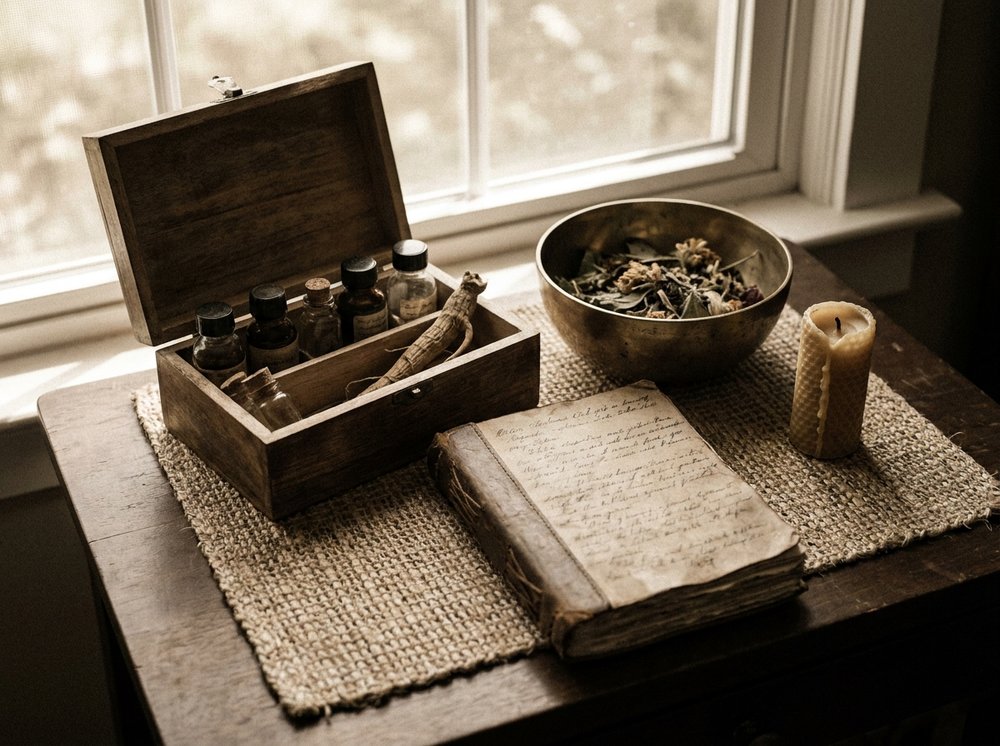
Pre-colonial Filipino healing was not one tradition but many — Tagalog, Bisaya, Ilokano, Pampango, Hiligaynon, Waray, Maranao, Ifugao. Each island had its own anatomy of spirit and flesh. What they shared was a belief that the body was inseparable from the anito (ancestors) and from the land: a sprain was not only a sprain, it was a sign that something in the person's relations with kin or with the earth had gone off-balance. The manghihilot's job was to re-balance both.
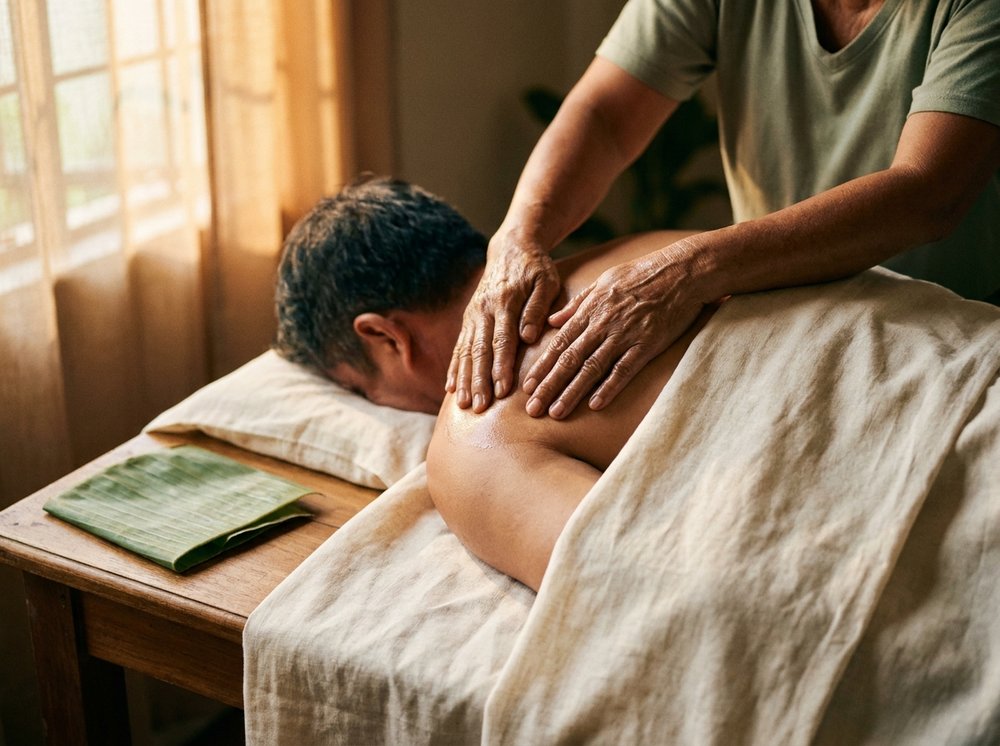
The methods were patient and specific: warm coconut oil, banana leaves heated over low flame, pressure along what we would now call myofascial lines, and a quiet reading of the radial pulse that could tell the healer where the hangin (wind, air, trapped energy) was lodged. The same vocabulary survives in our studio today — which is why visitors are sometimes startled to hear a classic hilot session described in terms older than the Spanish Empire.
1565–1898: healing under the friar's eye
The Spanish arrived and brought with them their own medicine — bleedings, purgatives, Latin prayers. The babaylan, as priestess, was suppressed. As healer, she was tolerated, then quietly domesticated. By the 1700s, every town in the archipelago had both a municipio and a woman everyone called Aling or Nanay who set bones and delivered babies. The priests looked the other way, so long as she added a Hail Mary to her prayers.
"The old woman of the village, whom the curate calls an ignorant, knows more of the body's ailments than the physician from Manila, for she has touched ten thousand bodies and he has read ten books."
— attributed to José Rizal, in conversation, Dapitan, 1894
Rizal himself, an ophthalmologist, was curious about folk medicine. In his Dapitan exile he catalogued local plants and sometimes sat with albularyos and manghihilots, asking them to describe what they did and why. He did not romanticise them — he was a physician first — but he respected the specificity of a hand that had worked on ten thousand bodies.
1898–1946: the American century
The Americans brought public hospitals, nursing schools, and a more thorough campaign against "superstition." Hilot retreated from the cities to the provinces, from the clinic to the back room, from daytime to the evening after mass. My grandmother remembered that in the 1930s her own mother was told by a schoolteacher in Tagbilaran not to speak of the pulse readings in front of the children, as if the practice itself might embarrass them into backwardness.
And yet the hands kept working. Every farming town in Bohol, every fishing town in Samar, every weaving town in Ilocos had someone who could set a dislocated shoulder. They did not call themselves healers. They called themselves maybahay (housewife), ale (auntie). But when a child fell from a carabao and could not walk, the neighbours came to her door.
1946–1997: the slow return
Post-war Philippines went through a long wobble — the rise of clinics, the rise of cheap antibiotics, the quiet shame many families felt about consulting a manghihilot when they could afford a GP. For decades, the craft lived mainly in rural barangays and in the diaspora's collective memory: the tita in New Jersey who still pressed her niece's neck when her niece came home with a migraine.
What saved hilot was partly scholarly — anthropologists from UP and Ateneo began documenting regional traditions in the 1970s — and partly economic. Many urban Filipinos, tired of fluorescent clinics, began to quietly seek out the old hands again. By the 1980s there were hilot studios in Makati charging more than a dermatologist. The practice had not died; it had simply waited.
1997: PITAHC and the heritage act
In 1997, Republic Act 8423 was passed — the Traditional and Alternative Medicine Act — and the Philippine Institute of Traditional and Alternative Health Care (PITAHC) was born. For the first time, hilot was named in Philippine law not as folklore but as heritage. Practitioners could be certified. Training programmes could be accredited. Hospitals began, slowly, to refer patients to licensed manghihilots for certain musculoskeletal conditions.
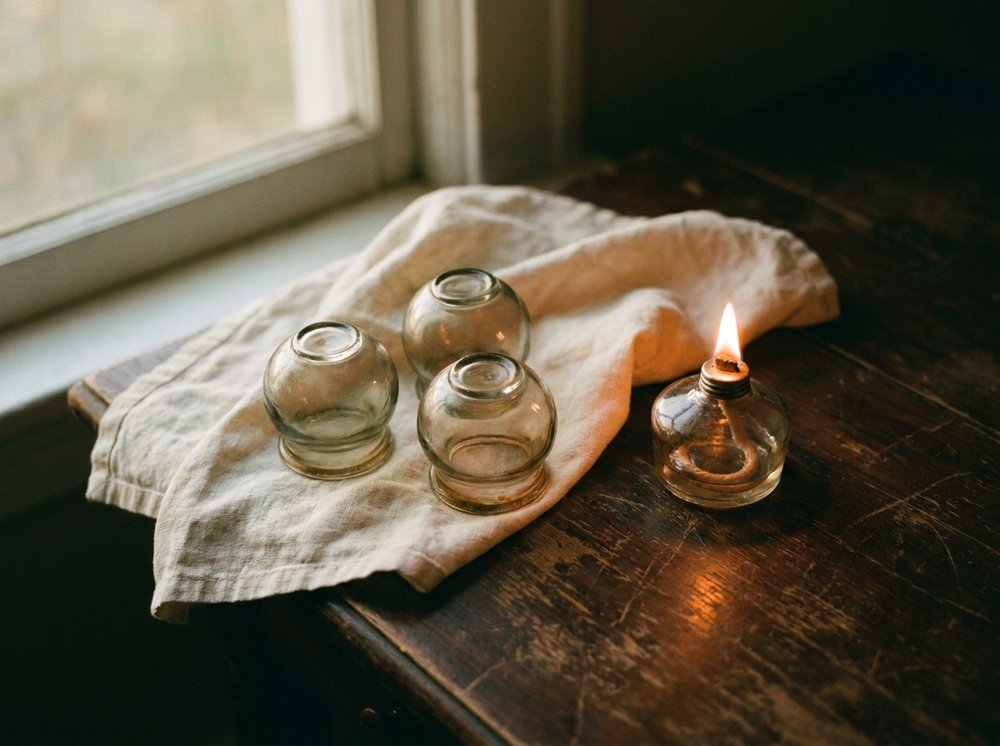
This mattered. It meant that the rural manghihilot could be acknowledged for what she always was — a skilled practitioner with thousands of hours of bodywork behind her. It meant that the dagdagay ritualists in Sagada and the ventosa masters in Cebu had a framework within which to teach their students without the students being laughed at in medical school.
What the last three decades have changed
Since 1997, hilot has become slightly more legible to outsiders and to younger Filipinos. Studios like ours keep PITAHC certification, HMO receipts, and a clear protocol for when to refer out. We weave hilot with cupping, with bamboo foot work, with modern physiotherapy when needed — but the heart of the work has not changed. A manghihilot still begins by washing her hands, warming oil in a saucer, and listening with her fingertips.
If you are curious about the living practice behind this history, we wrote a companion piece on ventosa cupping and what modern research says about it, and another on what to expect from your first hilot visit if you have never been. Four hundred years is a long memory. The hands are still warm.