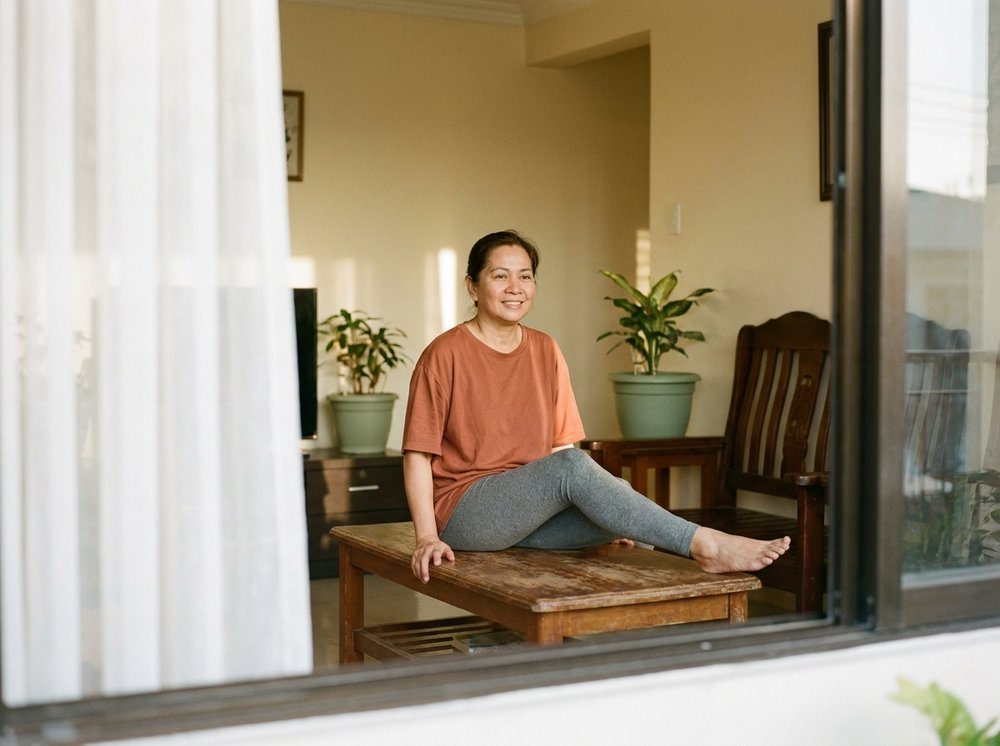
Most of the joint pain I see in patients over 50 is not caused by one dramatic moment. It is caused by ten thousand tiny ones — the way a woman has held her phone for six years, the way a man leans on the jeepney handrail every morning, the way a tita cooks dinner with her hip cocked to one side. Posture is not a single thing. It is the sum of how you live.
This note is deliberately concrete. No vague “sit up straight” advice. Instead, five real situations that Filipino bodies over 50 find themselves in daily, and exactly what to change. Pair it with the daily mobility rituals for stiff knees and you have the two most important joint habits I can give you, together.
1. Phone posture — the slow curve of the neck
The average Filipino adult now spends three to five hours a day looking at a phone. Tilted forward 45 degrees, the human head weighs the equivalent of 22 kilos on the neck and upper back. Over a decade, this silently rounds the upper spine, shortens the chest muscles, and sends quiet referral pain into the shoulders and thumbs.
The fix is not complicated:
- Bring the phone up to your eyes, not your eyes down to the phone. Elbows resting on a pillow or the arm of the chair.
- Every 20 minutes, look up at something at least 5 meters away for 20 seconds. The same cue protects the eyes.
- Do one slow shoulder roll — up, back, down — every time you put the phone down. It resets the upper back.
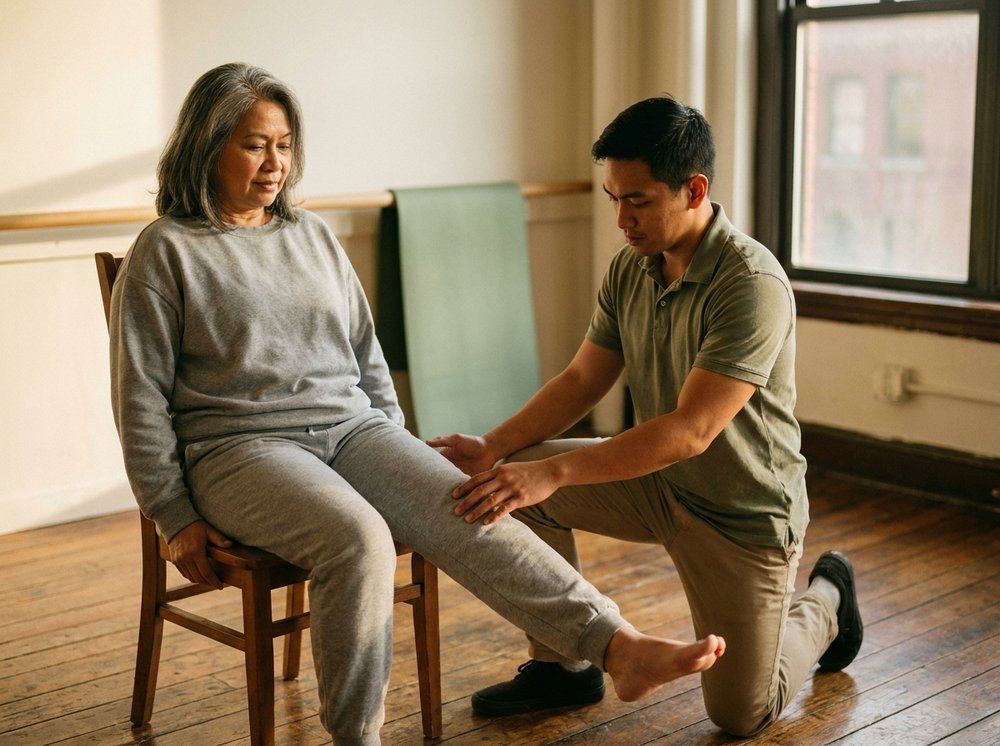
If you have already developed a forward-head posture, hands-on work can undo a surprising amount. A series of mobility rehab sessions pairs beautifully with these tiny habits.
2. Jeepney and MRT posture — the standing commute
Most Manila commuters stand for a portion of the journey. How you stand on a moving jeepney or an MRT carriage for 30 minutes, five days a week, is a significant load on the knees, hips, and lower back.
Three changes:
- Do not lock your knees. Keep a micro-bend — maybe 5 degrees. Locked knees send every bump straight into the cartilage.
- Feet hip-width apart, not together. A wider base absorbs the vehicle’s motion instead of your joints.
- Alternate the hand you grip with every few minutes. Always gripping with the right arm slowly twists the spine rightward over years.
If you can sit down, sit properly — both feet flat on the floor, bag on your lap rather than wedged between your ankles. Small things, but Filipino commuters do them thousands of times a year.
3. Stove posture — the cook’s silent hip
Many of the titas who come to the sanctuary have one hip that is quietly a centimeter higher than the other. When I ask why, nine times out of ten it is because they have cooked for thirty years with their weight shifted onto one leg — almost always the left — while stirring with the right hand. Add a counter that is a little too low or too high, and you have a recipe for uneven hip wear.
The corrections:
- Stand with both feet flat and evenly weighted while cooking. Consciously.
- If your counter is too low, put one foot up on a small stool, six inches high. Alternate feet every few minutes.
- Do not lean the hip against the counter edge while stirring. That lateral pressure on the iliac crest is a common source of chronic hip aggravation.
4. Chair posture — the long hours of sitting
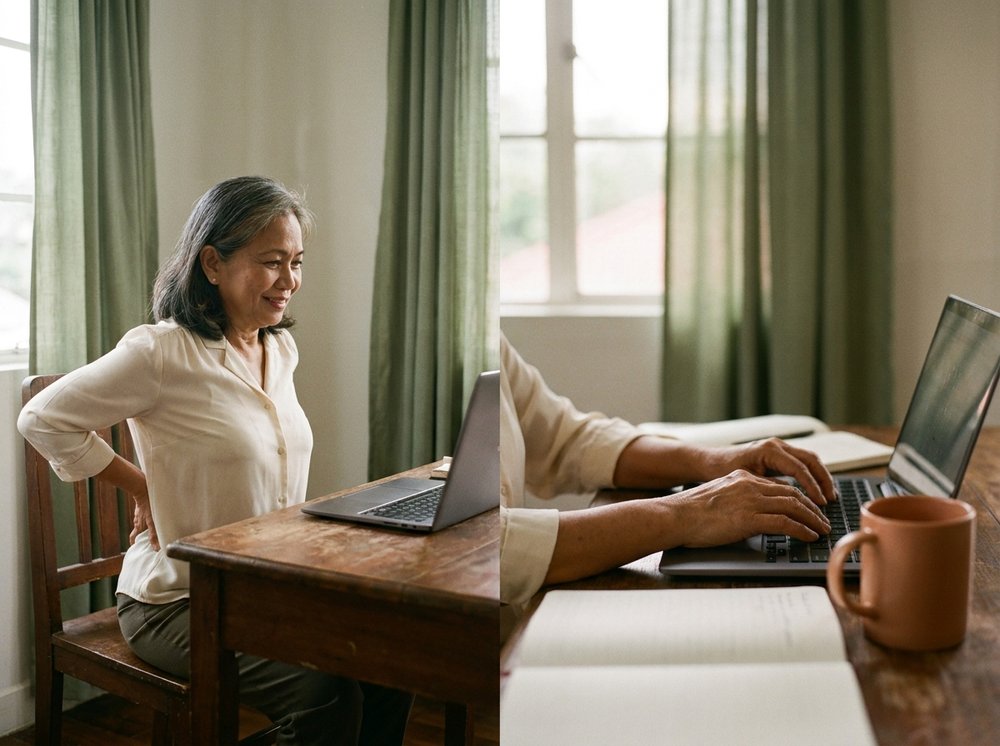
The single most important rule of sitting after fifty is simple: do not sit still for longer than 45 minutes. The posture itself matters less than the break. But when you are sitting, these four cues make the hours kinder:
- Hips slightly higher than knees. If your chair is too low, sit on a folded towel or a small firm cushion.
- Both feet flat on the floor. Crossed legs are not a crime, but alternate sides.
- Screen at eye level, not below. A small stack of books under a laptop works perfectly.
- A small rolled towel in the low of the back, not because of some mystical curve, but because it keeps the pelvis from tucking under and rounding the lower back.
Posture after fifty is not about standing like a soldier. It is about not spending ten hours a day in any one shape — movement is the real good posture.
5. Sleeping posture — the seven hours we forget
We spend about a third of our lives in bed. The way you sleep affects your joints more than almost any waking habit. The best sleeping posture for joints over 50 is not a rule, it is a pair of principles:
- Side sleepers: a pillow between the knees, of a height that keeps the hips level. A second small pillow hugged to the chest to support the top arm.
- Back sleepers: a small pillow under the knees to soften the lumbar curve. Not so high that the low back hollows.
- Stomach sleepers: if possible, transition away over weeks. It rotates the neck 90 degrees for hours and is the single worst position for the cervical spine after fifty.
What posture cannot do alone
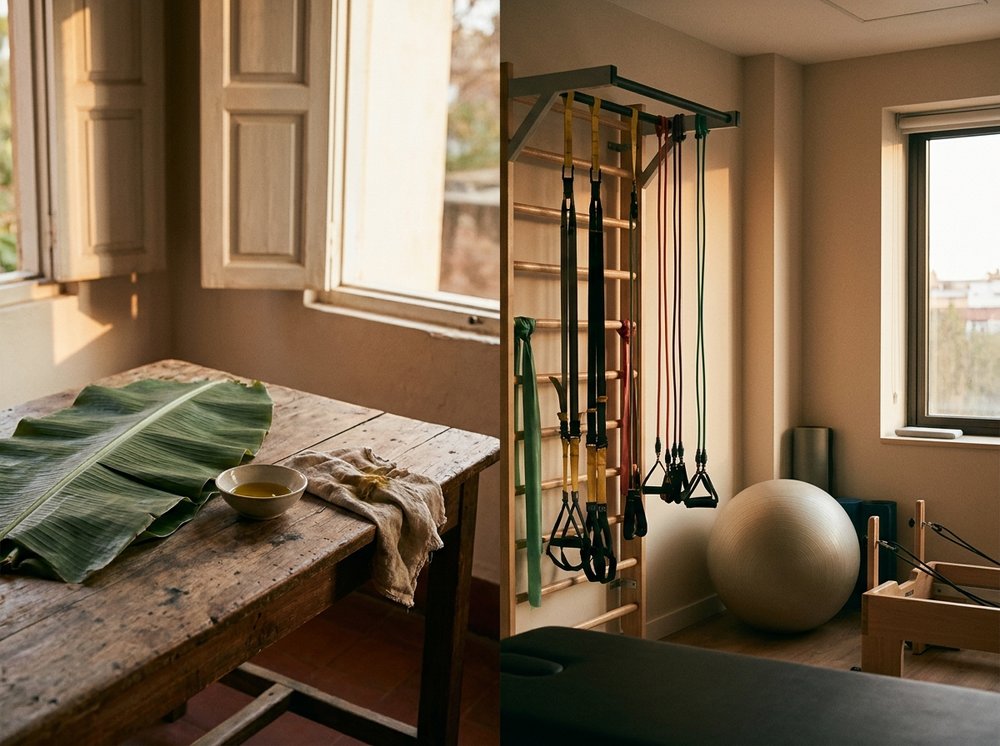
These habits are preventive, cumulative, and real. But if you are already in chronic pain from decades of old postures, habits alone will not reverse the pattern — they will only stop it from getting worse. This is where warm hands matter. Traditional hilot reads the body’s accumulated asymmetries through pulse and touch, and our manghihilots can often identify which side of your body has been quietly carrying more load for the last twenty years before you can name it yourself.
If you are ever unsure whether what you need is habit correction, hands-on work, or both, our honest guide on how to choose between hilot and physiotherapy is the most direct article on this site about which door to knock on first.
Posture is boring. That is its superpower. Small, unglamorous habits, repeated on Tuesdays you forgot about, quietly protect the joints you will still need at 75. Start with one — probably the phone one — and build slowly. Your future self is watching.